

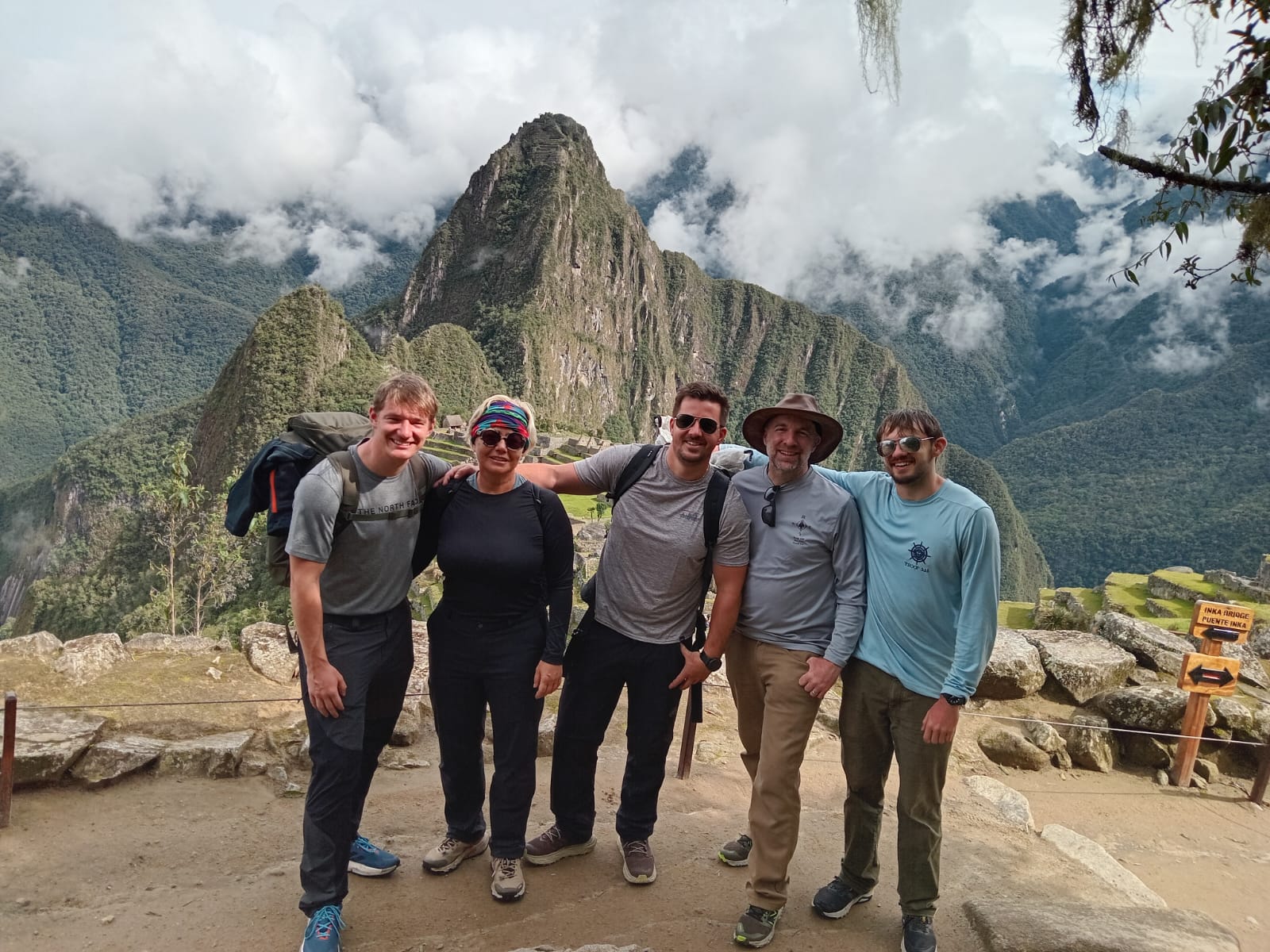
The 2 Day Inca Trail to Machu Picchu is a once in a lifetime experience that blends adventure, ancient history, Andean biodiversity, and a ceremonial arrival at Peru’s most iconic citadel: Machu Picchu.
This short version of the Classic Inca Trail allows travelers to hike original stone pathways built in the 15th century and conclude the journey by entering through the mystical Inti Punku the ancient Sun Gate used by the Incas as a sacred entrance to the Lost City.
At Machu Picchu Explorators, we have refined this journey to offer more than just a trek. We provide a carefully designed cultural immersion that combines history, storytelling, and personalized service for a truly transformative experience.
The History of the Inca Trail: More Than Just a Hiking Path
Part of the vast imperial road system known as the Qhapaq Ñan, the Inca Trail once connected territories from modern-day Colombia to Argentina.
Meanwhile, the section leading to Machu Picchu had ceremonial, religious, administrative, and strategic functions.
- Ceremonial
- Religious
- Administrative
- Strategic
Ancient pilgrims reached Machu Picchu through this sacred route as part of a spiritual transition ritual into a space considered holy by the Incas.
Walking this same path today is more than a hike it is a direct connection to the Inca civilization and a journey through living history.
What Makes the 2 Day Inca Trail Special?
Unlike alternative routes such as the Salkantay Trek or the Lares Trek, the Short Inca Trail is the only trek that allows hikers to enter Machu Picchu on foot through its original historic entrance.
This unique access makes it the most authentic way to arrive at the Lost City of the Incas without committing to the full 4-day Classic Inca Trail.
Key Features of the 2 Day Inca Trail
- Official starting point at KM 104 (Chachabamba checkpoint)
- Distance: Approximately 12-16 km (7.5-10 miles)
- Hiking time: 5-7 hours on Day 1
- Difficulty level: Moderate
- Includes a guided visit to Wiñay Wayna
- Arrival at Inti Punku (Sun Gate) with panoramic views of Machu Picchu
Another major advantage is that no camping is required. Travelers spend the night in a comfortable hotel in Aguas Calientes, making this option ideal for those who want adventure and authenticity without sacrificing comfort.
Complete and Detailed Itinerary 2 Day Inca Trail to Machu Picchu
Day 1: Cusco – KM 104 – Wiñay Wayna – Inti Punku – Aguas Calientes
Early Departure from Cusco
Your adventure begins with an early morning pickup in Cusco, followed by a scenic transfer to Ollantaytambo to board the train toward KM 104 the official starting point of the 2 Day Inca Trail to Machu Picchu.
At KM 104, hikers pass through the Inca Trail checkpoint and officially begin the trek.
Chachabamba Archaeological Site
Shortly after crossing the control point, you’ll visit Chachabamba, a small yet significant ceremonial complex associated with water worship.
Its stone fountains and intricate water channels demonstrate the Incas’ advanced hydraulic engineering and spiritual connection to natural elements.
Ascent Through the Cloud Forest
The trail gradually ascends through a fascinating cloud forest ecosystem a transition zone between the Andes and the Amazon basin.
Along this stretch, you may observe:
- Wild orchids
- Hummingbirds
- Butterflies
- Lush Andean tropical vegetation
The dramatic contrast between mountain landscapes and dense greenery creates one of the most visually striking sections of the hike.
Wiñay Wayna – The Treasure of the Inca Trail
Wiñay Wayna is widely considered one of the most beautiful archaeological sites along the Inca Trail.
Its name means “Forever Young,” and it stands out for:
- Steep agricultural terraces cascading down the mountainside
- Ceremonial enclosures
- Perfectly engineered water channels
- Finely carved stone architecture
Here, your guide provides an in-depth historical explanation before continuing toward the final and most anticipated stretch of the trail.
Arrival at Inti Punku – The Most Emotional Moment
Inti Punku marks the symbolic entrance to Machu Picchu.
From this legendary Sun Gate, hikers enjoy their first panoramic view of Machu Picchu often illuminated by the soft golden light of the late afternoon.
This is undeniably one of the most memorable and emotional moments of the entire journey.
After taking in the breathtaking views, the group descends toward the bus station area to travel to Aguas Calientes, where you will spend the night in a comfortable hotel and prepare for the guided tour of Machu Picchu the following day.
Day 2: Guided Tour of Machu Picchu
Early in the morning, you will take the bus back up to Machu Picchu for a professionally guided exploration of the citadel.
Main Sectors Visited
- Temple of the Sun
- Intihuatana
- Sacred Plaza
- Temple of the Three Windows
- Urban sector
- Agricultural terraces
The guided tour lasts approximately 2 to 3 hours, during which your expert guide explains:
- The astronomical function of the site
- Urban organization and social hierarchy
- Advanced anti-seismic engineering
- Spiritual symbolism within Inca cosmology
In the afternoon, you will return by train to Ollantaytambo and then transfer back to Cusco.
Difficulty Level and Physical Requirements
The 2 Day Inca Trail is considered moderate difficulty.
It is recommended for:
- Active travelers
- Visitors with basic to intermediate fitness levels
- Children over 10 years old who are accustomed to hiking
We strongly recommend spending 1–2 days acclimatizing in Cusco before starting the trek to reduce the risk of altitude discomfort.
Best Time to Hike the Inca Trail
The Inca Trail is open year-round except February.
- April to October: Dry season (best weather conditions)
- November to March: Rainy season
- February: Closed for maintenance
The most stable weather months are May, June, and September, making them ideal for hiking the 2 Day Inca Trail to Machu Picchu.
Official Permits and Regulations
The Inca Trail is strictly regulated by the Ministerio de Cultura del Perú.
Key regulations include:
- Limited daily permits
- Personal and non-transferable tickets
- Mandatory entry with an authorized tour operator
Due to high demand, especially for 2026 travel, we recommend booking 3 to 4 months in advance to secure availability.
Complete Packing List for the 2 Day Inca Trail
Technical Clothing
- Quick-dry hiking shirts
- Waterproof jacket
- Lightweight trekking pants
- Hiking shoes with strong grip
Accessories
- 20–30L daypack
- Sunscreen
- Hat and sunglasses
- Trekking poles
- Reusable water bottle
- Energy snacks
Documentation
- Original passport (required for Inca Trail checkpoint entry)
2 Day vs 4 Day Inca Trail: Key Differences
Choosing between the 2 Day Inca Trail and the Classic 4 Day Inca Trail depends on your time availability, fitness level, and travel goals.
| Aspect | 2 Day Inca Trail | 4 Day Inca Trail |
|---|---|---|
| Distance | 12–16 km (7.5–10 miles) | 42 km (26 miles) |
| Camping | No (Hotel in Aguas Calientes) | Yes (3 nights camping) |
| Physical Level | Moderate | High |
| Ideal For | Travelers with limited time | Full trekking adventure seekers |
Both options include hiking original Inca stone paths and arriving at Machu Picchu through Inti Punku.
However, the 2 Day Inca Trail to Machu Picchu is ideal for travelers who want an authentic experience without the physical intensity of multi-day camping.
Why Choose Machu Picchu Explorators?
At Machu Picchu Explorators, we focus on delivering more than a tour we create meaningful travel experiences.
We offer:
✔ Guaranteed Inca Trail permits
✔ Certified, experienced local guides
✔ Strategic itinerary planning
✔ Carefully selected hotels
✔ Personalized assistance from booking to return
Our mission is simple: not only to help you visit Machu Picchu, but to help you understand its historical and spiritual significance.
Final Thoughts: Is the 2 Day Inca Trail Worth It?
The 2 Day Inca Trail to Machu Picchu is the perfect choice for travelers seeking an authentic, well-organized, and emotionally powerful adventure.
Walking on original Inca pathways and arriving at Machu Picchu through the legendary Sun Gate transforms the entire travel experience.