

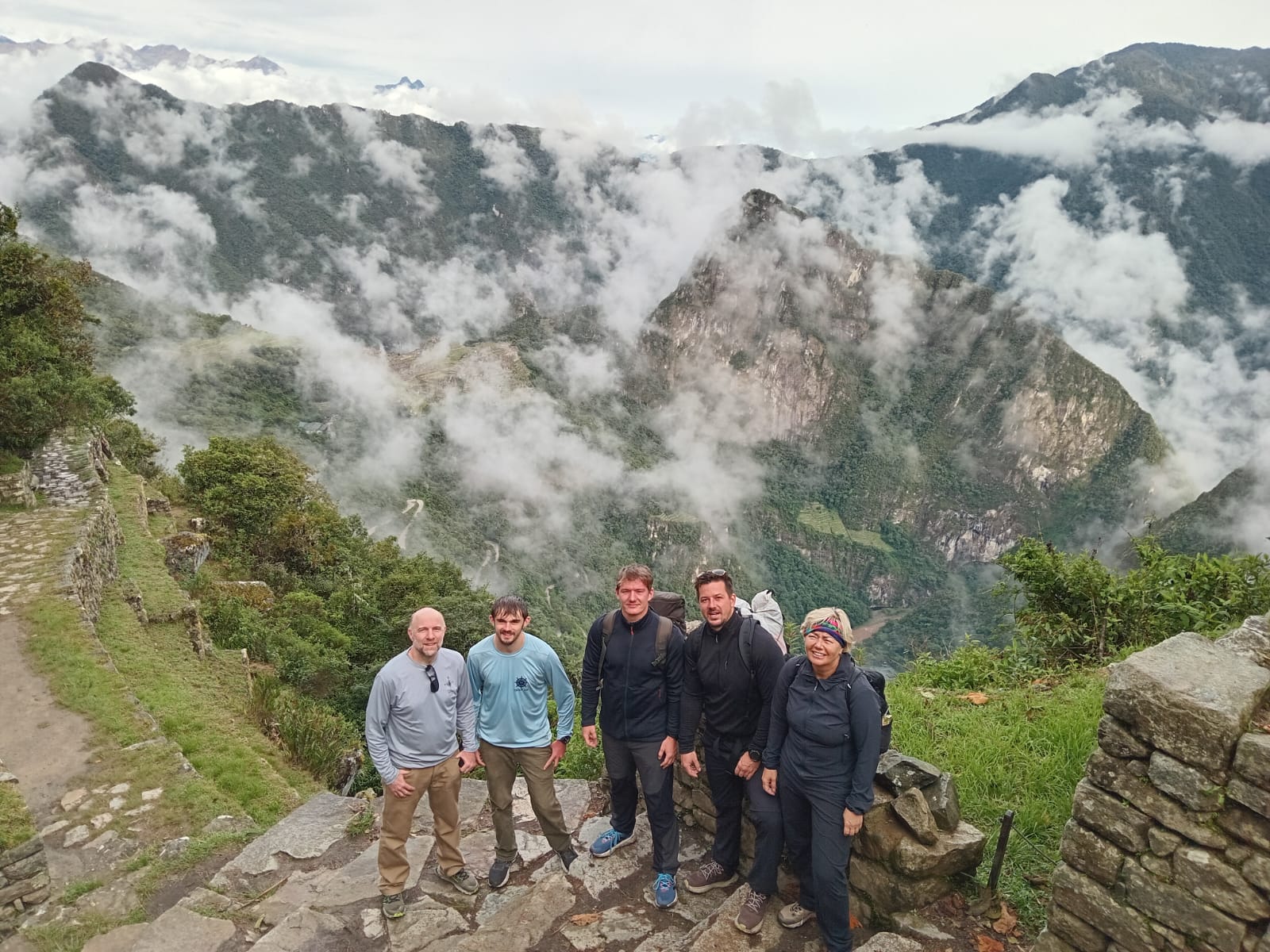
The Inca Trail to Machu Picchu, internationally known as the 4-Day Inca Trail, is the most famous trekking route in South America and the only trail that allows hikers to enter Machu Picchu on foot through Inti Punku (the Sun Gate), the original ceremonial entrance used by the Incas more than five centuries ago.
This 42-kilometer route is not simply a mountain hike. It is a historic journey that combines living archaeology, ancestral engineering, Andean biodiversity, and a progressively demanding physical challenge that transforms the experience into a truly life changing adventure.
Along the way, travelers cross original stone stairways, tunnels carved into solid rock, archaeological complexes hidden among towering mountains and cloud forests, culminating in the most breathtaking sunrise view of Machu Picchu.
In this comprehensive guide by MachuPicchuExplorators, you will find technical, historical, and practical information that very few blogs explain with such clarity.
What Is the Inca Trail Within the Qhapaq Ñan?
The Inca Trail is part of the Qhapaq Ñan, the colossal road network that connected the Inca Empire across more than 30,000 kilometers throughout South America. However, the section that travelers hike today was not a commercial or military road it was a sacred and ceremonial route that led directly to Machu Picchu.
Each segment was designed to integrate harmoniously with the mountain landscape without altering it. The Incas developed a drainage system that continues to function after more than 500 years, stone stairways carved directly into bedrock, and earthquake resistant retaining walls that still challenge modern engineering standards.
Walking this trail is like exploring an open-air archaeological museum, where history is not displayed behind glass cases, but lies beneath your feet.
How Inca Trail Permits Really Work
Access to the Inca Trail is strictly regulated by the Peruvian government to protect this World Heritage site:
- Only 500 permits are issued per day (including guides and porters)
- Approximately 200 actual spaces are available for tourists
- Each permit is linked to a specific passport number
- Permits are non-transferable and cannot be modified
- There are no in-person or last-minute purchases available
- Permits typically sell out 6 to 8 months in advance during high season
- The trail is completely closed in February for maintenance and conservation
These restrictions make the Inca Trail an exclusive and carefully planned experience, requiring early booking and proper organization.
Technical Trekking Facts That Almost No One Explains
| Parameter | Real Details |
| Total Distance | 42 km of original Inca stone trail |
| Highest Altitude | 4,215 m (Warmiwañusca / Dead Woman’s Pass) |
| Lowest Altitude | 2,430 m (Machu Picchu) |
| Daily Hiking Time | 6 to 9 hours per day |
| Ecosystems | Andes, highland puna, cloud forest, and subtropical forest |
| Terrain | Original Inca stone paths, wet soil, steep stairways, narrow mountain trails |
The true difficulty of the Inca Trail is defined by the combination of altitude, humidity, and continuous stone staircases rather than distance alone.
Detailed 4-Day / 3-Night Inca Trail Itinerary (Day-by-Day Experience)
Day 1: Km 82 – Wayllabamba / Ayapata
Your first contact with the original Inca stone trail. A gradual hike designed for acclimatization, including a visit to the archaeological site of Llactapata. Overnight camp above 3,000 meters (9,842 ft).
Day 2: Wayllabamba – Warmiwañusca – Pacaymayo (The Most Challenging Day)
A continuous ascent along original Inca stone staircases leading to the highest point of the trek, Warmiwañusca (Dead Woman’s Pass). This is the true physical and mental test of the Inca Trail.
Day 3: Pacaymayo – Archaeological Sites – Wiñay Wayna
An archaeological day within the cloud forest, featuring the highest concentration of Inca complexes along the route. A combination of history, nature, and spectacular mountain scenery.
Day 4: Wiñay Wayna – Inti Punku – Machu Picchu
Early morning hike to Inti Punku (the Sun Gate) for a breathtaking sunrise entrance to Machu Picchu, followed by a guided tour of the citadel.
Exclusive Archaeological Sites Along the Inca Trail
These archaeological sites are not accessible to travelers who arrive by train:
Llactapata, Runkurakay, Sayacmarca, Phuyupatamarca, Wiñay Wayna, and Inti Punku (the Sun Gate).
How Difficult Is the Inca Trail? (A Real and Technical Explanation)
The Inca Trail to Machu Picchu is classified as a moderate to challenging trek. However, this classification often falls short if the real factors that create physical strain along the route are not properly explained.
It’s not just about walking 42 km. The difficulty of the Inca Trail results from the combination of altitude, uneven archaeological terrain, constant humidity, and long consecutive hiking days.
1) Altitude: The True Silent Challenge
From the very first day, hikers are already above 3,000 meters (9,842 ft), and on the second day, the trek reaches its highest point at Warmiwañusca (Dead Woman’s Pass) at 4,215 meters (13,828 ft).
At this elevation, oxygen levels decrease significantly. This may cause:
- Shortness of breath even when walking slowly
- Mild headaches
- Faster-than-usual fatigue
- A slower walking pace
For this reason, acclimatizing in Cusco for 48 to 72 hours beforehand is not just a recommendation it is essential to fully enjoy the experience.
2) The Inca Stone Staircases: The Most Physically Demanding Factor
Unlike many mountain treks that follow dirt trails, the Inca Trail is largely composed of original stone staircases built more than 500 years ago.
These steps increase the level of effort due to:
- Irregular step height
- Hard stone surfaces that impact knees and ankles
- Long stretches of continuous ascent and descent
- Wet and slippery sections in the cloud forest
Many hikers agree that the descents can be more demanding than the ascents due to the constant impact on the knees.
3) Long Hiking Days for Four Consecutive Days
Each day involves 6 to 9 hours of hiking, including breaks for rest, hydration, and archaeological visits. This is not a short walk it is a sustained physical effort over four consecutive days.
The body does not fatigue only because of distance, but due to the cumulative physical demand.
4) Humid and Variable Weather Conditions
The Inca Trail crosses multiple ecosystems: the high Andes, puna grasslands, and cloud forest. In a single day, you may experience:
- Intense cold in the early morning
- Humid heat at midday
- Light rain in the afternoon
- Dense fog at higher elevations
This constant climate variability forces the body to continuously adapt, increasing overall energy expenditure.
So… Who Can Hike the Inca Trail?
The Inca Trail does not require technical mountaineering experience. However, it does require:
- Basic to good physical condition
- The ability to walk several consecutive hours per day
- Prior preparation with hiking or cardiovascular training
- Proper acclimatization in Cusco
People of all ages successfully complete the Inca Trail every year, as long as they arrive well prepared.
Key Tips to Overcome the Difficulty Successfully
- Arrive in Cusco at least 2 days in advance
- Use trekking poles
- Maintain a slow and steady pace
- Stay hydrated frequently
- Pack properly using a layered clothing system
The difficulty of the Inca Trail is not about the distance, but about how the terrain and altitude challenge the body. With proper preparation and professional guidance, it becomes a completely achievable and deeply rewarding experience.
Inca Trail During the Rainy Season (November to March)
Hiking the Inca Trail during the rainy season is a very different experience compared to the dry season. Between November and March, rainfall is more frequent, the environment becomes more humid, and the cloud forest vegetation reaches its most vibrant and lush stage.
Far from being a drawback, this season completely transforms the trekking landscape: mountains covered in mist, orchids in bloom, moss growing over ancient Inca stones, and an intensely green scenery that many travelers consider the most photogenic time of the year.
However, these conditions also bring additional challenges that hikers should be aware of before planning their journey.
What Changes on the Inca Trail During the Rainy Season?
Slippery Stone Staircases
When wet, the original Inca stone steps become smooth and slippery. This requires extra caution while walking, the use of trekking poles, and hiking boots with excellent grip.
Muddy Sections in the Cloud Forest
Some parts of the trail may become muddy, especially in the cloud forest areas. This can slow your pace, but it is completely manageable with proper gear.
Higher Humidity at Campsites
Clothing may take longer to dry, and nights can feel colder due to the increased ambient humidity.
Frequent Fog at Higher Elevations
Visibility may temporarily decrease in higher areas, creating mystical landscapes while also requiring greater attention when hiking.
Advantages of Hiking the Inca Trail During the Rainy Season
- Greener and more vibrant landscapes
- Fewer travelers compared to peak dry season
- A more intimate and quieter experience along the trail
- Flora at its peak beauty (orchids, ferns, mosses)
Disadvantages to Consider
- Greater caution required while walking
- Waterproof clothing and footwear are essential
- Possibility of light daily rainfall, especially in the afternoons
With proper preparation, many travelers greatly enjoy this season due to its unique natural beauty and peaceful atmosphere.
When Does the Inca Trail Close?
There is a common misconception: many people believe that the Inca Trail closes because of heavy rains. This is incorrect.
The Inca Trail closes every year during the entire month of February by official regulation of Peru’s Ministry of Culture. The reasons are technical and conservation related not climatic.
Why Does the Inca Trail Close in February?
Comprehensive Trail Maintenance
- Restoration of stone staircases
- Drainage system repairs
- Inspection and reinforcement of retaining walls
- Maintenance of signage
Ecological Conservation
- The route is given a break from human traffic
- Natural regeneration of flora in the cloud forest and high-Andean ecosystems
Archaeological Preservation
- Cleaning and conservation work on the Inca archaeological sites along the trail
During February:
- No permits are issued
- No agency is allowed to operate the trail
- There are no exceptions
When Does It Reopen?
The Inca Trail officially reopens on March 1st each year, resuming normal operations until the next annual closure.
This scheduled conservation period is one of the key reasons why the Inca Trail remains one of the best-preserved archaeological trekking routes in the world.
History and Spiritual Significance of the Inca Trail
The Inca Trail that thousands of travelers hike each year was not built as a simple transportation route. This trail was part of the Qhapaq Ñan, the vast road network that integrated the Tahuantinsuyo (Inca Empire), and this specific section functioned as a sacred and ceremonial pathway leading to Machu Picchu.
Machu Picchu was not an ordinary city. Archaeological studies agree that it served as a spiritual, astronomical, and political center reserved for the Inca elite. For this reason, access to the citadel was not granted through just any entrance, but through Inti Punku (the Sun Gate), a symbolic gateway aligned with the path of the sun and imbued with profound ritual meaning.
This route was used by:
- Inca priests on spiritual pilgrimages
- Nobles and imperial authorities
- Chasquis (messengers) carrying sacred information
- Ceremonial delegations traveling toward the sacred llaqta (Inca settlement)
Along the trail, several elements demonstrate that this was not a commercial road:
- Stone staircases precisely carved into living bedrock
- Ceremonial tunnels and passageways
- Strategically positioned archaeological complexes
- Drainage systems that continue functioning after more than 500 years
Each archaeological site encountered before reaching Machu Picchu acts as a ritual prelude, progressively preparing the visitor for the final entrance.
For this reason, when the modern traveler completes the Inca Trail, they are not simply finishing a trek they are retracing, step by step, an ancient Andean spiritual journey that culminates at the same sacred gateway designed by the Incas centuries ago.
Real Camp Logistics and Meals on the Inca Trail
One of the biggest surprises for travelers is discovering the high level of organization and logistical support behind the Inca Trail experience.
Since this is a strictly regulated route with no hotel infrastructure, the entire camping system is mobile and carefully planned.
Authorized Campsites
Each night is spent at official campsites designated by Peru’s Ministry of Culture, reserved exclusively for authorized trekking groups. These areas include:
- Flat spaces for tent setup
- Designated kitchen areas
- Basic restroom facilities
- Permanent supervision by park rangers
Tents and Equipment
- High-mountain tents resistant to rain and cold
- Insulated sleeping pads
- Dining tent equipped with tables and chairs
- Fully equipped kitchen tent
By the time hikers arrive at camp, everything is already set up by the porter team.
Meals Along the Trail
Food is another aspect that pleasantly surprises most travelers:
- Hot and energy-rich breakfasts
- Freshly prepared lunches along the route
- Multi-course dinners
- Snacks and hot beverages
Cooks prepare meals in mountain conditions, ensuring nutritious dishes that help compensate for the physical effort of hiking.
The Essential Role of Porters
Porters are a fundamental part of the Inca Trail experience. They carry:
- Camping equipment
- Food supplies
- Cooking utensils
Thanks to their work, hikers only carry their personal daypack, making it possible to complete the trek in a more comfortable and safe way.
Technical Packing List for the Inca Trail (Professional Layering System)
Proper packing is essential to fully enjoy the Inca Trail. The weather changes constantly between Andean cold, humid heat, and unexpected rain.
For this reason, the recommended approach is the 3-layer clothing system.
First Layer (Base Layer)
- Quick-dry thermal shirt
- Thermal leggings
- Trekking socks
Function: Keep the body dry and retain warmth.
Second Layer (Insulation Layer)
- Fleece or thermal jacket
- Trekking pants
Function: Preserve body temperature.
Third Layer (Protection Layer)
- Waterproof and windproof jacket
- Rain poncho
Function: Protect against rain, wind, and humidity.
Proper Footwear
- Waterproof trekking boots (already broken in, never brand new)
- Extra thick socks
The Inca stone staircases can be wet and slippery, making proper traction essential.
Additional Essential Gear
- Trekking poles (reduce impact on knees)
- Headlamp
- Sunglasses and sunscreen
- Hat and gloves
- Hydration bladder or reusable water bottle
- Small, comfortable daypack (20–30 L)
A well-prepared backpack can make the difference between a physically exhausting experience and a truly enjoyable one.
Best Time to Hike the Inca Trail
| Months | Conditions |
| April – October | Dry season, clearer skies and better views |
| November – March | Rainy season, lush and vibrant vegetation |
| February | Closed |
Inca Trail Frequently Asked Questions (Detailed FAQ)
These are the most common questions travelers have before booking the Inca Trail to Machu Picchu. Answering them clearly not only improves the reader’s experience but also strengthens the blog’s SEO positioning.
Can I hike the Inca Trail without a tour operator?
No. The Inca Trail is regulated by Peru’s Ministry of Culture and can only be completed through an authorized tour operator that manages official permits, certified guides, and accredited porters.
How far in advance should I book?
During high season (May to September), permits sell out 6 to 8 months in advance. For the rest of the year, it is recommended to book at least 3 to 5 months ahead.
How difficult is the Inca Trail really?
It is considered a moderate to challenging trek. It does not require technical mountaineering experience, but it does require good physical condition, the ability to hike several hours per day, and proper acclimatization to altitude in Cusco.
Is it harder than the Salkantay Trek?
The Salkantay Trek is longer and reaches higher altitudes. However, the Inca Trail includes significantly more original stone staircases, which create a different type of muscular strain. For this reason, many travelers find the Inca Trail more physically demanding.
Is there cellphone signal or internet along the trail?
No. Most of the route has no mobile signal or Wi-Fi access, making it a true digital detox and an authentic immersion in nature.
What happens if it rains during the trek?
The tour operates normally. Rain is common between November and March. With proper waterproof gear, the hike continues safely.
What is the recommended minimum and maximum age?
The suggested minimum age is 10 years old. There is no official maximum age, but travelers over 60 are advised to consult a physician before undertaking the trek.
Where do you sleep during the Inca Trail?
In authorized campsites along the route, in high-mountain tents set up by the logistical team.
Can the Inca Trail be done in February?
No. The Inca Trail is completely closed throughout the month of February, with no exceptions.
The Inca Trail with MachuPicchuExplorators
Hiking the Inca Trail is not only about securing a permit it’s about how the entire experience is operated.
At MachuPicchuExplorators, we understand that this trek is a historical, physical, and emotional journey. That is why we carefully manage every operational detail:
- Early and secure management of official permits
- Certified professional guides with extensive historical and mountain expertise
- Accredited porters treated with fairness and respect
- High-quality camping equipment
- Balanced and freshly prepared meals along the route
- Precise organization of schedules, rest periods, and safety protocols
Our focus is not just to walk the trail, but to ensure that every traveler experiences it with safety, knowledge, and constant support throughout the journey.
Conclusion: The Original Way to Reach Machu Picchu
Arriving at Machu Picchu by train is impressive.
Arriving on foot through the Inca Trail is unforgettable.
The Inca Trail is not simply a trekking route. It is the original ceremonial access designed by the Incas to enter the sacred city. It is a journey that connects history, nature, personal effort, and visual reward in a single experience.
Every stone staircase, every archaeological site, and every kilometer walked prepares the traveler for the most anticipated moment: crossing Inti Punku (the Sun Gate) and witnessing Machu Picchu from the very same vantage point as the ancient inhabitants of the Tahuantinsuyo.
For this reason, the Inca Trail is not just a way to reach Machu Picchu.
It is the most authentic, historical, and impactful way to experience it.