

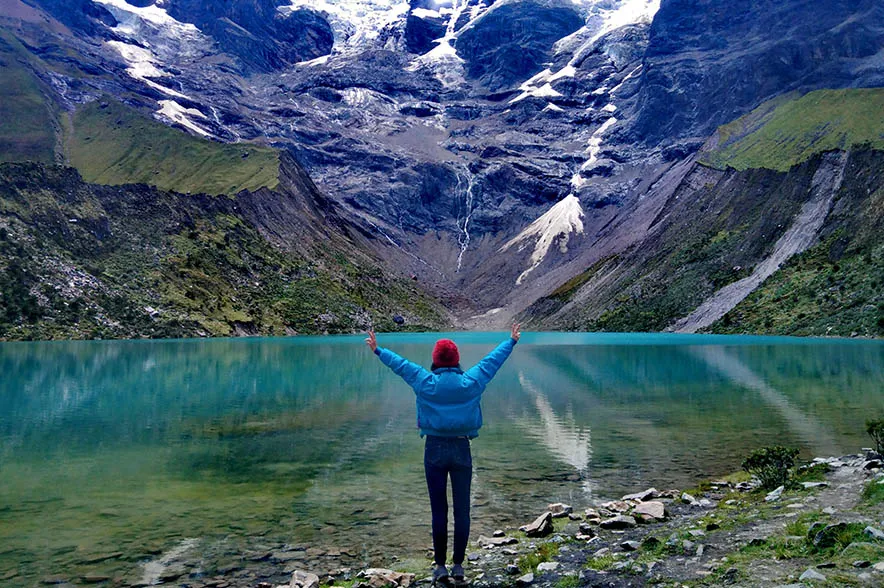
Official Technical Guide by MachuPicchu Explorators
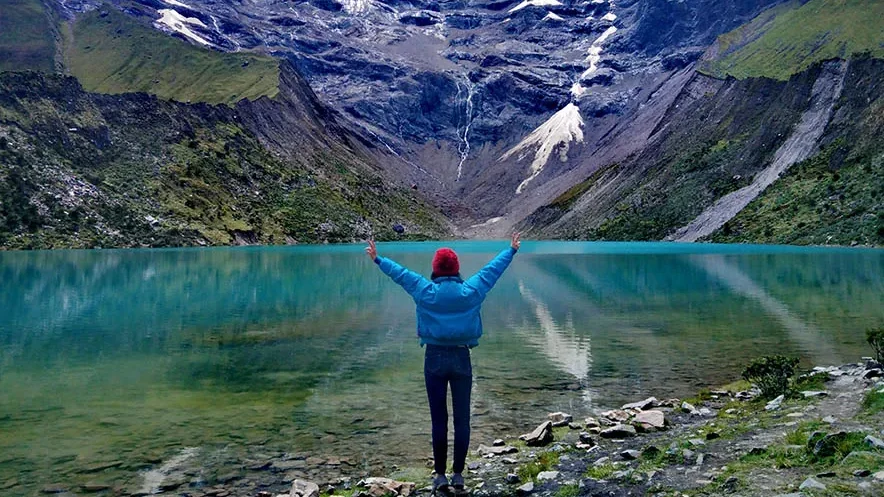
The Humantay Lake Cusco experience is much more than a scenic destination. It is an active glacial system, a natural geological laboratory, and a real example of human physiological adaptation to high altitude.
Located at 4,200 meters (13,780 ft) above sea level, this lake is one of the most accessible high-Andean glacial ecosystems in southern Peru.
At MachuPicchu Explorators, we believe that visiting Humantay Lake means understanding:
- Its strategic location in the Andes
- Its geological origin
- The physiological impact of altitude
- Professional risk management
- Seasonal weather conditions
- The real daily experience
I. Strategic Location and Geomorphological Context
Humantay Lake is located in the Vilcabamba mountain range, part of the Salkantay system in Cusco, Peru.
Technical Geographic Data:
- Region: Cusco, Peru
- Province: Anta
- District: Mollepata
- Soraypampa altitude: 3,900 m
- Lake altitude: 4,200 m
- Ecosystem: High-Andean puna
The Humantay Glacier feeds the lake through snowmelt runoff.
Geomorphologically, the area features:
- U-shaped valleys (glacial erosion)
- Closed depressions
- Steep slopes
- Young, unstable soils
II. Geological Formation: Glacial Dynamics and Mineralogy
Quaternary Glacial Origin
During the Quaternary glaciations, large ice masses shaped the Andes.
The Humantay glacier:
- Carved the bedrock
- Formed a glacial basin
- Left morainic deposits
As the glacier retreated, the basin filled with meltwater, forming the lake.
Why is Humantay Lake Turquoise?
The turquoise color is not just a reflection.
It is caused by:
- Glacial flour (fine mineral sediment)
- Blue-green light scattering
- Low organic absorption
At high altitude, stronger UV radiation enhances the color intensity.
Environmental Fragility
Humantay is a young ecosystem.
Main risks include:
- Trail erosion from foot traffic
- Pollution from waste
- Alteration of water balance
Responsible tourism and local regulation are essential.
III. Real Difficulty: High-Altitude Adaptation
Mountains are not measured in distance but in adaptation.
At 4,200 meters, the body experiences:
- Reduced atmospheric pressure
- Lower oxygen saturation
- Increased heart rate
- Faster metabolism
The challenge is not only physical, but also mental.
Humantay requires:
- Controlled pacing
- Deep breathing
- Energy management
- Mental awareness
At MachuPicchu Explorators, we teach travelers how to walk the mountain not compete with it.
IV. Weather by Month: Best Time to Visit Humantay Lake
January – February
Heavy rainfall, low visibility, slippery trails, vibrant green landscapes.
March
Transition month with mixed weather.
April
Start of stable conditions, excellent for photography.
May
Best month to visit. Clear skies and stable weather.
June – July
Dry and cold, with temperatures near 0°C in the morning.
August
Stronger winds due to temperature variation.
September
Stable weather with fewer tourists.
October
Beginning of intermittent rains.
November – December
Increasing humidity and return of rainy season.
Impact on Experience:
- Dry season → better visibility, colder temperatures
- Rainy season → greener landscapes, more challenging hike
V. Real Daily Experience: Step-by-Step Timeline
- 04:00 – Wake up in Cusco
- 06:30 – Breakfast and preparation
- 08:30 – Arrival at Soraypampa
- 09:00 – Start hiking
- 09:40 – Increased heart rate
- 10:15 – Final steep section
- 10:40 – First view of the turquoise lake
- 11:00 – Rest and contemplation
- 12:00 – Descent
- 13:30 – Lunch
- 18:00 – Return to Cusco
This is a physical, psychological, and visual experience.
VI. Altitude Sickness: Risks and Prevention
Mild acute mountain sickness (AMS) may include:
- Headache
- Nausea
- Fatigue
- Dizziness
Professional Recommendations:
- Acclimatize for at least 48 hours
- Stay hydrated
- Walk at a slow pace
- Eat light meals
- Avoid alcohol
- Follow your guide’s instructions
- Monitor symptoms
👉 Immediate descent is the most effective response to severe symptoms.
Our team is trained in high-altitude first aid.
Final Recommendation by MachuPicchu Explorators
The Humantay Lake Cusco experience is not just a short hike it is a true high-mountain journey.
Travelers who understand altitude, respect the pace, and prepare properly transform this hike into a meaningful experience.
At MachuPicchu Explorators, we do not improvise in the mountains.
We interpret them scientifically, manage them professionally, and experience them with respect.
With proper planning, the right equipment, and expert guidance, Humantay Lake becomes one of the most unforgettable moments of your trip to Cusco.