

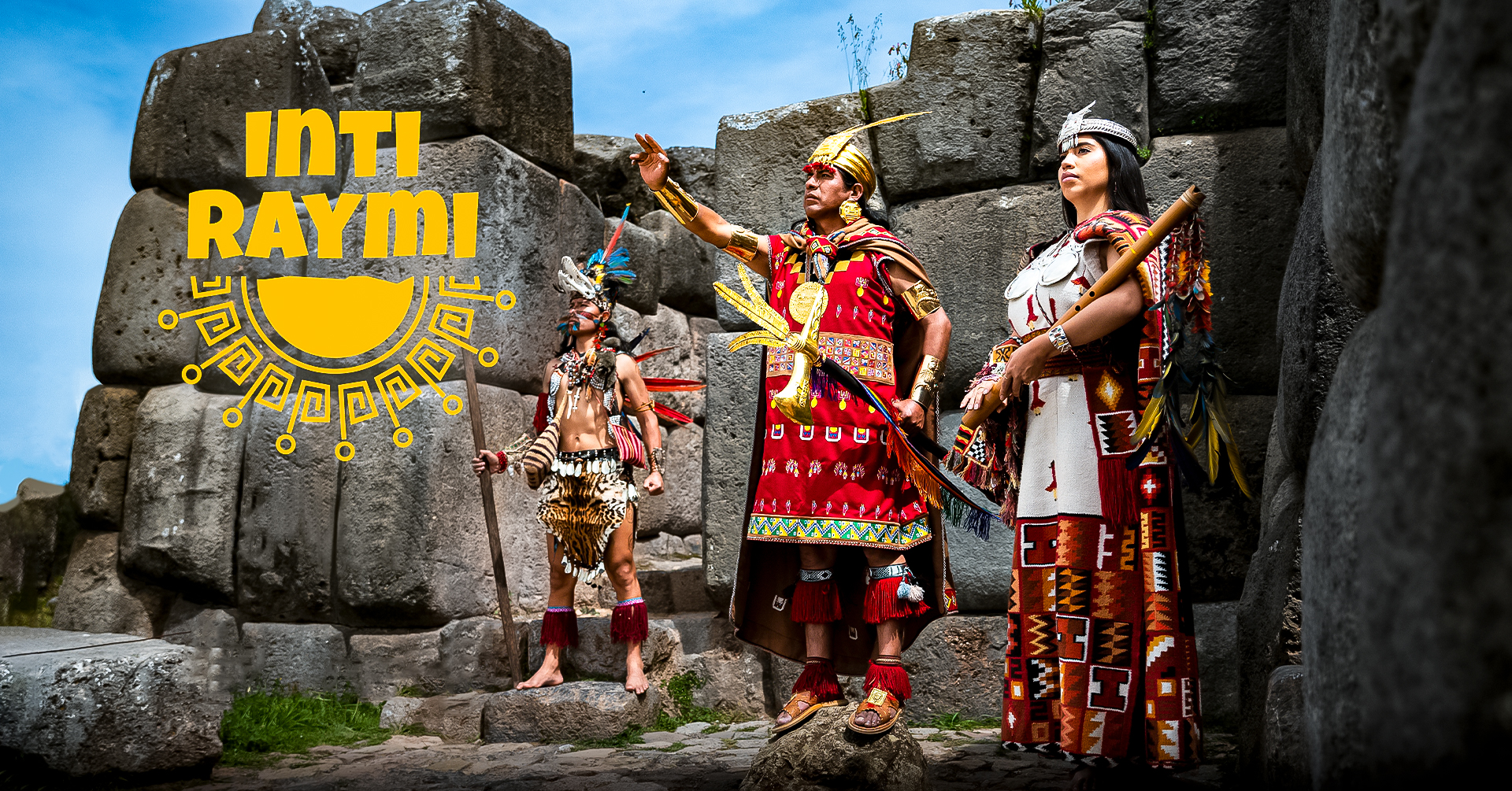
Every June 24, the city of Cusco transforms from a historic destination into the living epicenter of an imperial memory that never disappeared. On this day, Inti Raymi the Festival of the Sun revives one of the most powerful ceremonies of the Andean world, a ritual that once unified religion, politics, astronomy, and social order at the heart of the Inca Empire.
In 2026, Inti Raymi will take place on Wednesday, June 24, coinciding exactly with the winter solstice in the Southern Hemisphere. But understanding Inti Raymi means more than knowing the date. It means recognizing its symbolic depth, sacred architectural setting, and the cultural identity it continues to reaffirm.
At Machu Picchu Explorators, we believe Inti Raymi should not be experienced as an isolated spectacle, but as a historical event that deserves context, preparation, and real understanding.
The Imperial Origin of Inti Raymi: The Vision of Pachacútec
To understand the magnitude of Inti Raymi, we must return to the 15th century, when the Inca Empire reached political consolidation under the leadership of Pachacútec.
Pachacútec was not merely a conqueror. He was a state reformer who understood that an empire stretching from southern Colombia to northern Chile required symbolic cohesion and that cohesion had to be sacred.
Inti Raymi was institutionalized as the most important ceremony of the Inca calendar. It was not a simple agricultural celebration. It was a state ceremony presided over by the Sapa Inca, regarded as the direct son of the Sun god.
Representatives from the four regions of the empire Chinchaysuyo, Antisuyo, Collasuyo, and Contisuyo gathered in Cusco. Their presence was both religious and political. The empire reaffirmed its unity under the solar authority of the Inca.
The Winter Solstice and Andean Cosmology
June 24 marks the shortest day of the year in the Southern Hemisphere.
Western astronomy considers it a simple seasonal transition.
For the Andean world, however, it represented a critical cosmic turning point.
According to Inca cosmology, the universe is structured into three interconnected realms:
- Hanan Pacha (upper world)
- Kay Pacha (earthly world)
- Ukhu Pacha (inner or ancestral world)
The Sun god, Inti, belonged to the upper realm but sustained life in the earthly world.
As daylight shortened, it was believed that the Sun was moving away. Ritual reciprocity was required to strengthen it. This reflects the Andean principle of ayni everything received must be returned.
Inti Raymi was therefore a ceremony of cosmic reciprocity. The people offered ritual energy and devotion to ensure the Sun’s powerful return.
The Original Ceremony: Fasting, Ritual and Authority
Colonial chronicles describe Inti Raymi as lasting several days.
The nobility observed ritual fasting. Ceremonial purification took place. Offerings of chicha and food were prepared.
One central moment involved the ritual sacrifice of llamas. Priests examined their organs to interpret omens for the agricultural year.
The Inca wore garments of gold, sacred feathers, and finely woven textiles. Nothing was decorative without meaning.
Inti Raymi did not simply honor the Sun it reaffirmed divine legitimacy of imperial rule.
Colonial Prohibition and Cultural Silence
Following the Spanish conquest in the 16th century, Inti Raymi was officially banned. Colonial authorities understood that the ceremony reinforced Andean identity and could become a symbol of resistance.
Although the formal celebration disappeared, its essence survived. Agricultural rituals and solar traditions continued within Andean communities, transformed yet persistent.
The memory of Inti Raymi never vanished.
The Modern Reconstruction of Inti Raymi
In 1944, Cusco intellectuals revived the ceremony based on colonial chronicles, especially those of Inca Garcilaso de la Vega.
Today, Inti Raymi is performed across three historic locations:
Qorikancha
The former Temple of the Sun and spiritual center of the empire.
Plaza de Armas del Cusco
Once known as Huacaypata, the main Inca ceremonial plaza.
Sacsayhuamán
The monumental ceremonial complex where the central performance takes place before thousands of spectators.
More than 700 actors participate annually. The script is carefully structured. The Inca is selected through an official casting process. Costumes are based on historical research.
Inti Raymi 2026: Strategic Planning for the Full Experience
On June 24, 2026, Cusco will experience one of its highest tourism peaks of the year. Hotels reach full occupancy. Tickets for the ceremony at Sacsayhuamán sell out weeks in advance.
For this reason, we recommend:
- Arriving at least two days early for acclimatization
- Taking a historical Cusco City Tour
- Visiting the Sacred Valley before the event
- Attending Inti Raymi with a specialized guide
- Scheduling Machu Picchu after June 24
This sequence allows travelers to experience a coherent narrative: origin, expansion, ritual, and legacy.
Inti Raymi as a Transformative Cultural Experience
Attending Inti Raymi is not simply watching a reenactment. It is witnessing how an ancient civilization continues to preserve its symbolic memory.
Inti Raymi represents identity, pride, and historical continuity.
Conclusion: The Sun Still Rises Over Cusco
Inti Raymi 2026 will once again affirm that the Inca legacy belongs not only to the past, but to the living memory of Cusco.
When the Inca raises his arms to the sky at Sacsayhuamán, it is not merely a performance.
It is a reminder that the Sun remains a symbol of renewal, balance, and life.