en
en 
The Peruvian government through Sernanp limits access to 500 permits per day. However, this number includes tourists, guides, porters, and support staff — which means only around 150–200 actual hikers can start on any given day.
We strongly recommend booking at least 6 months in advance for the dry season (May–October). For July and August — the most popular months — permits can sell out up to 12 months ahead.
Shoulder season months (April, October, November) typically have more availability, but booking 3–4 months ahead is still advisable.
No. It is mandatory to hike the Inca Trail with a licensed Peruvian tour operator. Independent trekking is not permitted. Only authorized agencies can purchase permits through the official Sernanp booking system.
This regulation exists to protect the archaeological sites and the environment, and to ensure hikers' safety in this remote area.
Inca Trail permits are non-refundable and non-transferable. They are issued specifically to your passport number and cannot be changed to another person's name under any circumstances.
Date changes may be possible depending on availability, but this is handled by the tour operator and cannot be guaranteed. We recommend purchasing travel insurance that covers trek cancellation.
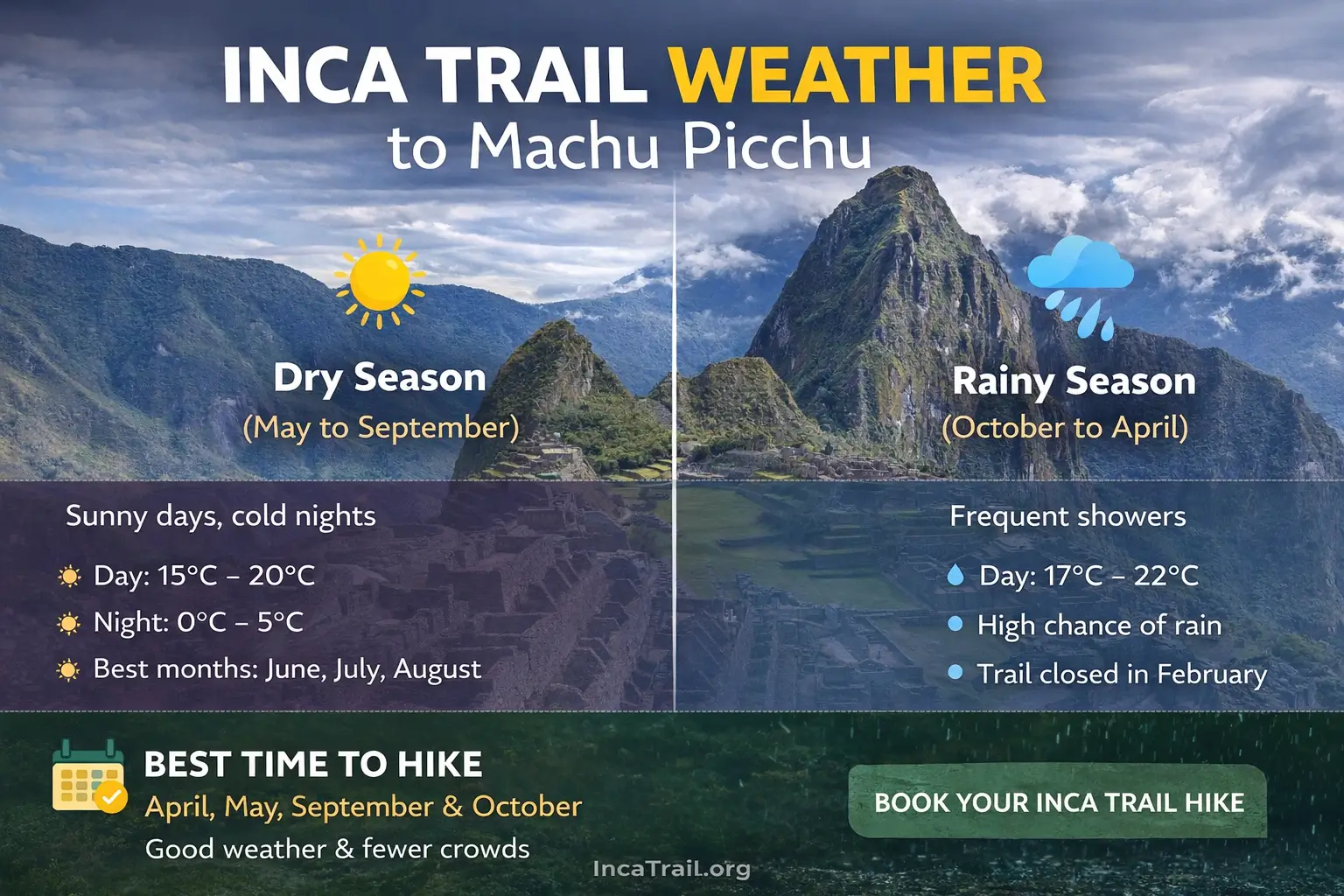
Yes. The Inca Trail closes every year throughout the entire month of February for annual maintenance and restoration work carried out by Sernanp.
If you want to visit Machu Picchu in February, excellent alternatives include:
- Salkantay Trek — 5 days, no permit required, open year-round
- Lares Trek — beautiful Andean communities route
- Train to Aguas Calientes + bus to Machu Picchu
You must carry the following at all times during the trek:
- Original passport — checked at every control point (no copies accepted)
- Printed Inca Trail permit — your name, dates, and passport number must match exactly
- Machu Picchu entry ticket (provided by your tour operator)
The Inca Trail is rated moderate to challenging. The main difficulty comes from three factors:
- Altitude — reaching 4,215 m at Dead Woman's Pass on Day 2
- Uneven terrain — thousands of original Inca stone steps, some steep and narrow
- Distance — 43 km over 4 days with significant elevation gain and loss
Fit beginners who prepare properly (regular cardio and hiking training for 2–3 months) complete it successfully every day. Prior trekking experience is helpful but not mandatory.
Day 2 is universally considered the toughest. It involves a climb from 3,000 m to the summit of Dead Woman's Pass (Abra de Warmihuañusca) at 4,215 m — a gain of over 1,200 m — followed by a steep descent to Camp 2 at 3,580 m.
Most hikers take 5–7 hours on Day 2. Starting early and going at your own pace is the key to making it comfortable.
We recommend starting training at least 2–3 months before your trek:
- Cardio: Running, cycling, or swimming 3–4x per week
- Hiking: Day hikes with elevation gain on uneven terrain — especially downhill, which stresses knees
- Stair climbing: Excellent Inca-step simulator
- Core and leg strength: Squats, lunges, and single-leg exercises
- Break in your boots: Do your training hikes in the same boots you'll wear on the trail
There is no official minimum or maximum age limit set by Sernanp. However, as a guide:
- Children: Most operators recommend a minimum age of 10–12, as the terrain is demanding and altitude can affect younger children more severely
- Seniors: Many hikers in their 60s and 70s complete the trail successfully with good preparation
We assess each hiker individually. Please contact us to discuss your specific situation — we may suggest a shorter route or alternative trek if appropriate.
There are two bags involved:
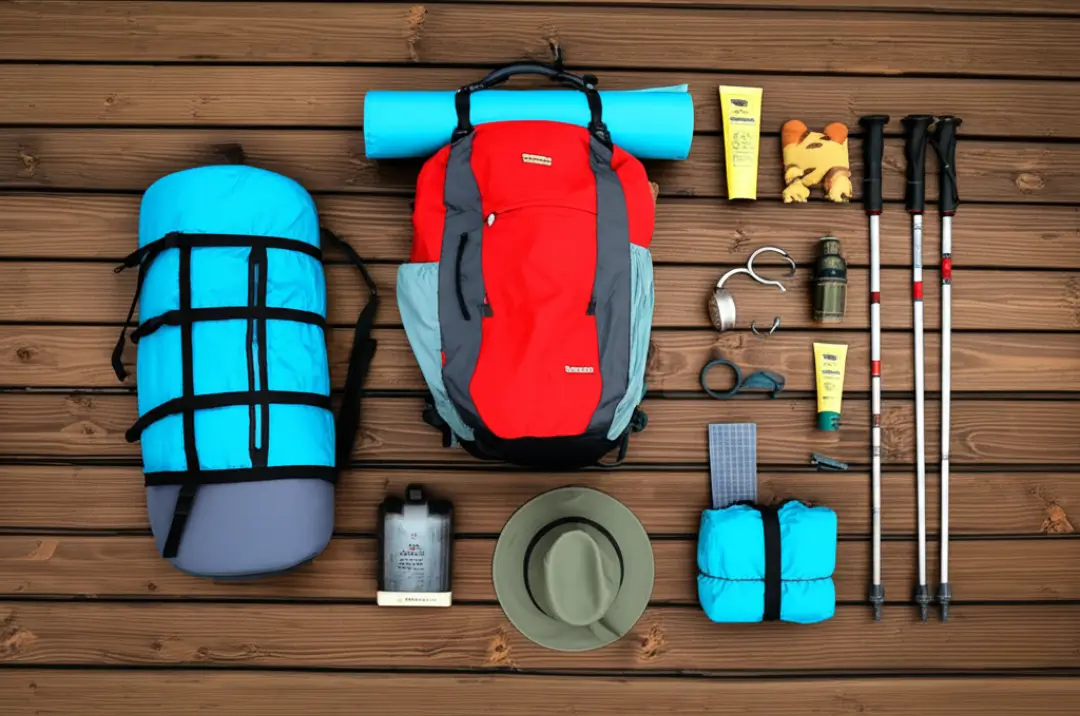
- Duffel bag (carried by porter): Maximum 6 kg of your personal belongings. The porter's total carry load is capped at 25 kg including their own gear.
- Day pack (carried by you): You carry this every step of the way. We recommend keeping it under 7 kg, ideally 5–6 kg.
Yes. Cusco has many gear rental shops near the Plaza de Armas and along Plateros Street. You can rent:
- Trekking poles (~S/10–20 per day)
- Sleeping bags rated for low temperatures (~S/15–30 per day)
- Duffel bags (~S/10 per day)
- Rain ponchos and waterproof jackets
We recommend renting sleeping bags if yours isn't rated for −5°C or below. Always check rental equipment carefully before accepting it.
Trekking poles are highly recommended, especially for the steep descents on Days 2 and 3. The ancient Inca stone steps are uneven, sometimes slippery, and vary greatly in height — poles significantly reduce stress on your knees.
If you don't own poles, they are widely available for rent in Cusco at low cost.
Yes. Most hotels and hostels in Cusco offer free or low-cost luggage storage. We also arrange secure storage at our office for clients during the trek.
This is the standard practice — you only take your duffel and day pack on the trail, leaving your main suitcase or backpack safely in Cusco until you return.
The Classic 4-Day Inca Trail starts at KM 82 (Piscacucho), approximately 82 km by rail from Cusco. The trail ends at Machu Picchu via the Sun Gate (Inti Punku).
After visiting Machu Picchu on Day 4, most hikers take the bus down to Aguas Calientes and then the train back to Ollantaytambo or Cusco in the afternoon.
Your tour operator handles all transportation. Typically:
- Pick-up from your hotel in Cusco at 4:30–5:00 AM on Day 1
- Private van drive to Ollantaytambo (~1.5 hours) or directly to KM 82 (~2.5 hours)
- Brief stop for breakfast at a local restaurant near the trailhead
- Arrival at KM 82 by approximately 7:30–8:00 AM
We strongly recommend arriving in Cusco at least 2 full days before the trek begins. Cusco sits at 3,400 m above sea level, and most travelers experience some degree of altitude sickness (soroche) upon arrival.
Those 2 days allow your body to begin acclimatizing — rest, drink plenty of water, avoid alcohol, and take it easy. Some hikers benefit from 3 days, especially those coming from sea level.
Yes. All meals are included from breakfast on Day 1 through lunch on Day 4. Your expedition cook prepares fresh, hot meals at every campsite — including soups, main courses, and snacks.
We cater to vegetarian, vegan, and gluten-free diets — just let us know in advance. We can also accommodate most food allergies with prior notice.
There are basic toilet facilities at each campsite, maintained by Sernanp. They are simple squat-style or pit toilets — not luxury facilities. There are also some toilet facilities at certain points along the trail.
Between facilities, hikers must practice Leave No Trace principles. Always carry toilet paper and waste bags, as nothing is left on the trail. The tour crew brings a private toilet tent for use during the day.
Mobile signal is very limited and unreliable throughout most of the trail. You may get intermittent signal at some campsites or viewpoints, but plan to be effectively offline for 4 days.
There is no Wi-Fi anywhere on the trail. Internet and strong mobile service resume once you reach Aguas Calientes on Day 4.
Altitude sickness (soroche) occurs when you ascend too quickly and your body doesn't get enough oxygen. Symptoms include headache, nausea, fatigue, dizziness, and shortness of breath.
Prevention tips:
- Arrive in Cusco 2+ days early and acclimatize before hiking
- Drink 3–4 liters of water daily throughout the trek
- Avoid alcohol the night before and during the trek
- Go slow and steady — "despacio" is your best friend on the trail
- Drink mate de coca (coca leaf tea) — a traditional Andean remedy
- Consider Diamox (acetazolamide) — consult your doctor before departure
Our guides are first-aid trained and carry a first aid kit including oxygen. If a hiker is unable to continue due to illness or injury, there are several options:
- Rest at the current camp while the group continues
- Be escorted back to the nearest evacuation point by a porter or guide
- In serious cases, evacuation by stretcher or helicopter (travel insurance with evacuation cover is essential)
Mild altitude sickness usually resolves by descending a few hundred meters. Most cases on the Inca Trail are manageable with rest and hydration.
Travel insurance is not mandatory by law, but we strongly require it for all our clients. Your policy must include:
- Medical evacuation coverage (helicopter evacuation can cost USD $10,000–$30,000)
- Emergency medical expenses
- Trek cancellation or curtailment
Please carry a printed copy of your policy and the emergency contact number for your insurer throughout the trek.
We do not recommend the Classic 4-Day Inca Trail during pregnancy. The combination of extreme altitude (4,215 m), strenuous exertion, and limited access to medical facilities makes it inadvisable.
Please consult your doctor before making any decision. If you still wish to visit Machu Picchu, the train to Aguas Calientes followed by the bus to Machu Picchu is a safe and beautiful alternative that avoids the high-altitude passes.
The typical staff-to-hiker ratio for a standard group trek is:
- 1 licensed bilingual guide per group (required by Sernanp)
- 1 assistant guide for groups over 8 hikers
- 1–2 porters per hiker to carry gear, tents, food and cooking equipment
- 1 head chef and 1–2 kitchen assistants
On average, a group of 8 hikers travels with a crew of 15–20 support staff.
Tipping is customary and greatly appreciated — it represents a significant portion of the crew's income. Recommended amounts per hiker:
- Lead guide: S/80–120 (USD $20–30)
- Assistant guide: S/50–80 (USD $13–20)
- Each porter: S/50–80 (USD $13–20)
- Head chef: S/60–100 (USD $15–25)
- Kitchen assistants: S/40–60 (USD $10–15)
Porter welfare is regulated by Peruvian law. Sernanp requires that all registered porters:
- Carry no more than 25 kg total (including their personal gear)
- Are provided with food, shelter, and appropriate equipment
- Receive a fair wage as set by government regulations
When choosing a tour operator, always check that they are a certified ethical operator and are members of organizations like the Porter Protection Project. We are committed to fair pay and humane working conditions for all our crew.
After entering through the Sun Gate (Inti Punku) at around 9:00–10:00 AM on Day 4, you will have approximately 3–4 hours at the Machu Picchu citadel with your guide, who will give a full historical tour of the main areas.
After the guided tour you have free time to explore at your own pace, take photos, and visit additional areas. Most groups take the bus down to Aguas Calientes at 1:00–2:00 PM to catch the afternoon train back to Cusco.
Yes, but it requires booking a separate additional ticket well in advance, as both mountains have very limited daily permits (400 people for Huayna Picchu, 800 for Machu Picchu Mountain).
Keep in mind that after 4 days of trekking your legs will be tired — many hikers choose to simply enjoy the citadel rather than climb an additional mountain. If you plan to do this, let us know when booking so we can arrange the extra ticket for you.
Yes. Official shuttle buses run continuously from the Machu Picchu bus stop (just outside the citadel entrance) down to Aguas Calientes from approximately 5:30 AM to 5:30 PM.
The ride takes about 25 minutes and costs USD $24 round-trip or USD $12 one-way. Your tour operator will include bus tickets in your package. From Aguas Calientes, you take the train back to Ollantaytambo and then a bus or van to Cusco.
The following items are strictly prohibited inside the Inca Trail national park:
- Drones — banned throughout the entire protected area
- Single-use plastics — no plastic bags or single-use bottles
- Aerosol cans — including deodorant sprays (use roll-on)
- Glass containers — including bottles
- More than 500 mL of alcohol
- Firearms or weapons of any kind
- Pets
Rangers may inspect bags at control points. Prohibited items will be confiscated.
The Inca Trail operates under strict Leave No Trace principles to protect this UNESCO World Heritage site:
- All waste — including food scraps, toilet paper, and packaging — must be carried out
- Only biodegradable soap and shampoo are permitted
- Hikers must stay on the marked trail at all times
- Do not touch, remove, or damage any archaeological structures or artifacts
- Campfires are prohibited — all cooking is done on gas stoves
Within reason, yes — experienced hikers often prefer to walk at a faster pace ahead of the group. However, Sernanp requires that all hikers stay within the boundaries of their permitted group and do not hike solo or join other groups.
In practice, your guide will establish meeting points at key landmarks and campsites. You can hike at your own pace between these points. Solo hiking away from the main trail is not permitted.
Still have questions?
Contact us and our Cusco-based team will get back to you within 24 hours.